Engine 01
The physical deep-tech engine. EnergyX Foundry turns building surfaces into energy-generating infrastructure through advanced energy materials, including perovskite photovoltaics, architecturally integrated solar skins, and digital fabrication of complex forms. It translates engineering decisions into physical systems designed for the building, its performance requirements and its manufacturing constraints.
Materials → integrated envelope → fabrication
Next-generation photovoltaic materials
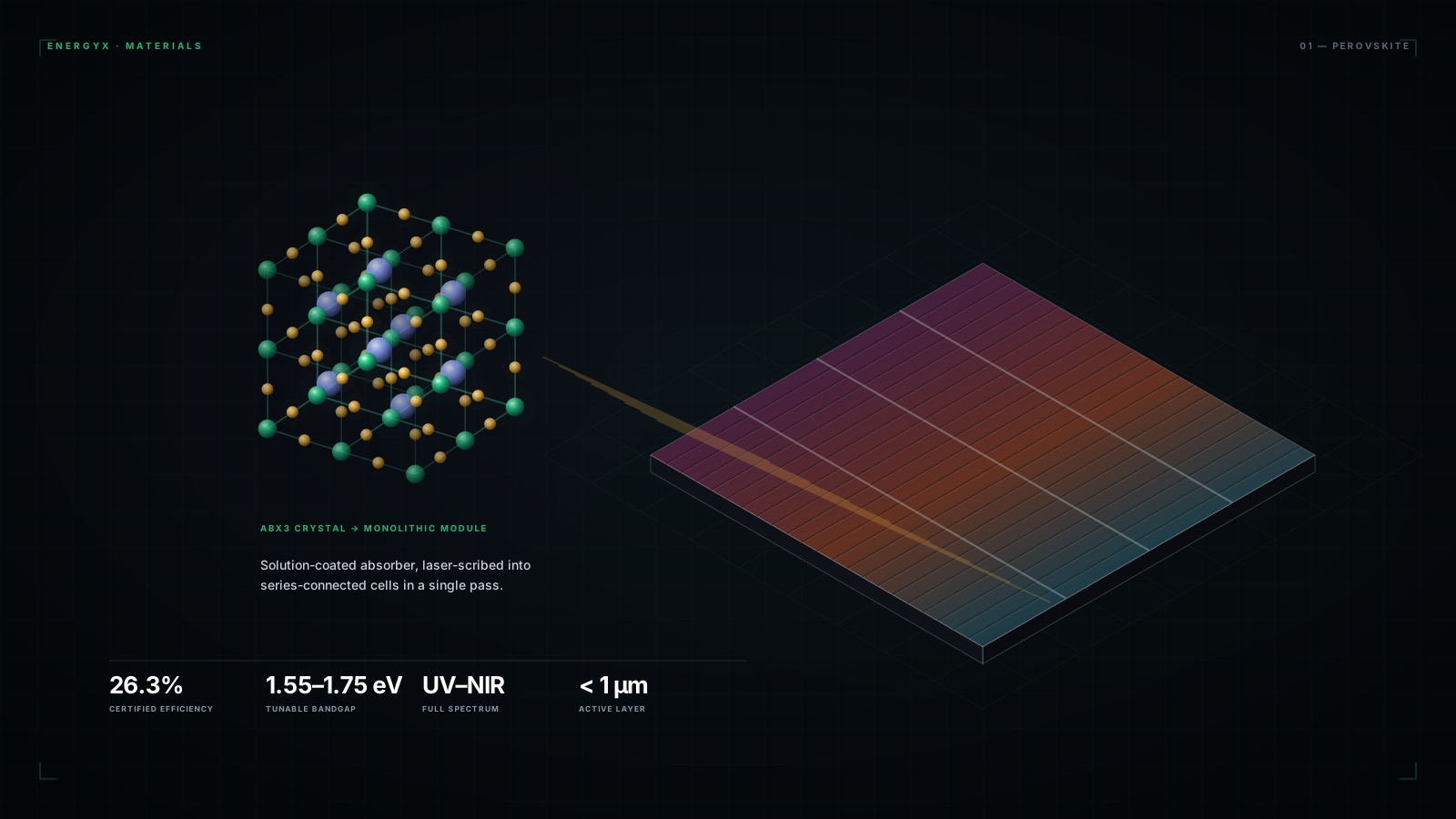
Silicon is approaching the efficiency ceiling physics allows it. Perovskite is not. Its bandgap is tunable — change the A-site cation and the absorber shifts across 1.55–1.75 eV, so the material can be matched to the light it is actually asked to convert, from ultraviolet through to the near-infrared.
The absorber is coated from solution at low temperature and laser-scribed into series-connected cells in a single pass. No ingot. No wafer saw. No high-vacuum furnace. The active layer finishes under a micron thick, which is precisely what makes lightweight, curved and semi-transparent building surfaces possible.
Stacked on a silicon heterojunction cell, the two junctions divide the spectrum between them. That is how the ceiling moves.
Design for manufacture and assembly
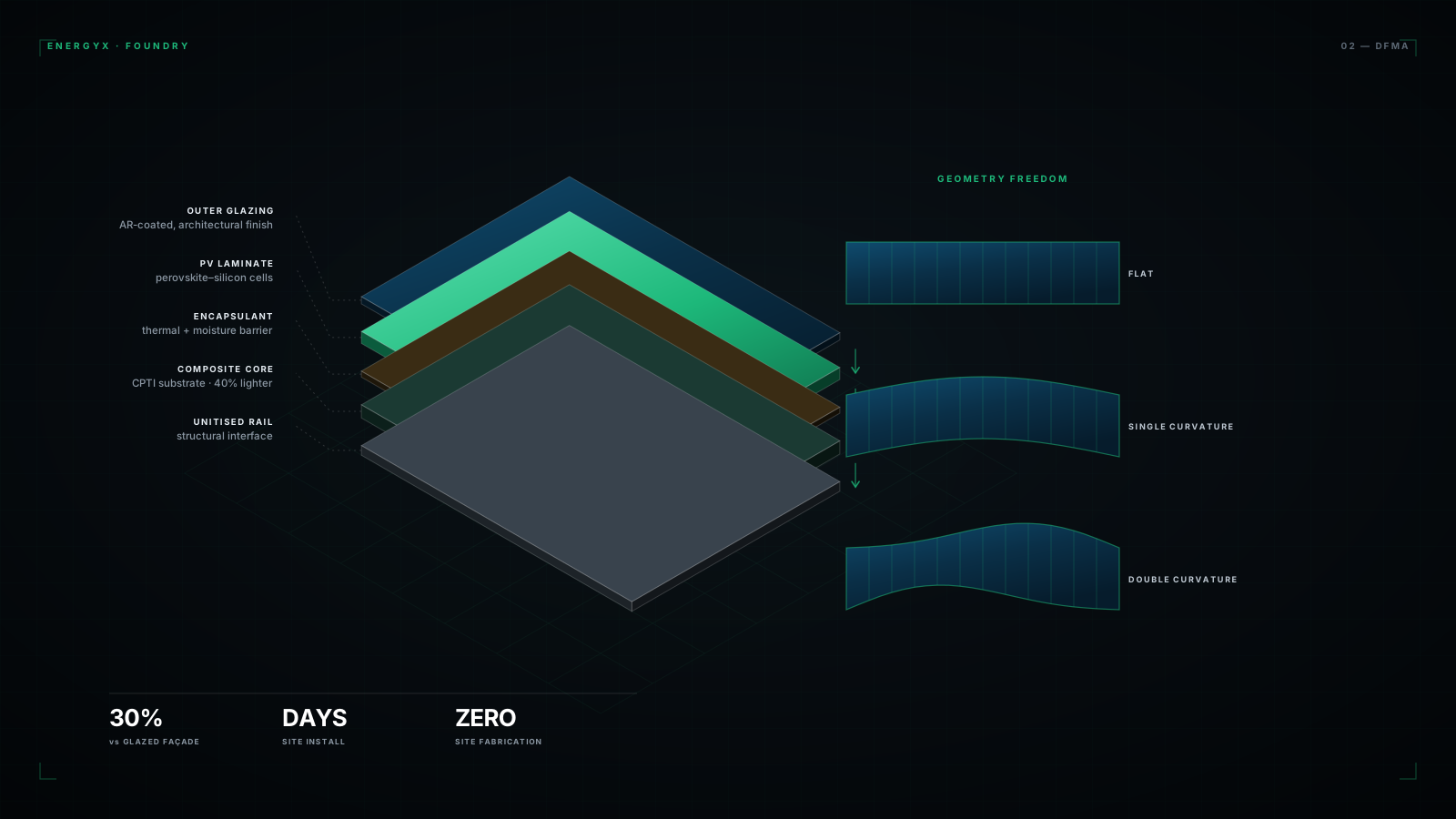
A DFMA panel is engineered as one part and built as one part: unitised rail, composite core, encapsulant, photovoltaic laminate and outer glazing, laminated in the factory and delivered as a finished component. Site work becomes installation, not fabrication.
The consequence matters more than the process. Because each panel is parametrically defined rather than selected from a fixed catalogue, the envelope follows the architecture instead of constraining it — double-curvature façades, tapered and twisting profiles, non-orthogonal geometry, and specified colour, texture and transparency — with structural performance and yield engineered for each configuration.
A building no longer has to look like a solar project to be one.
The building envelope as a generator
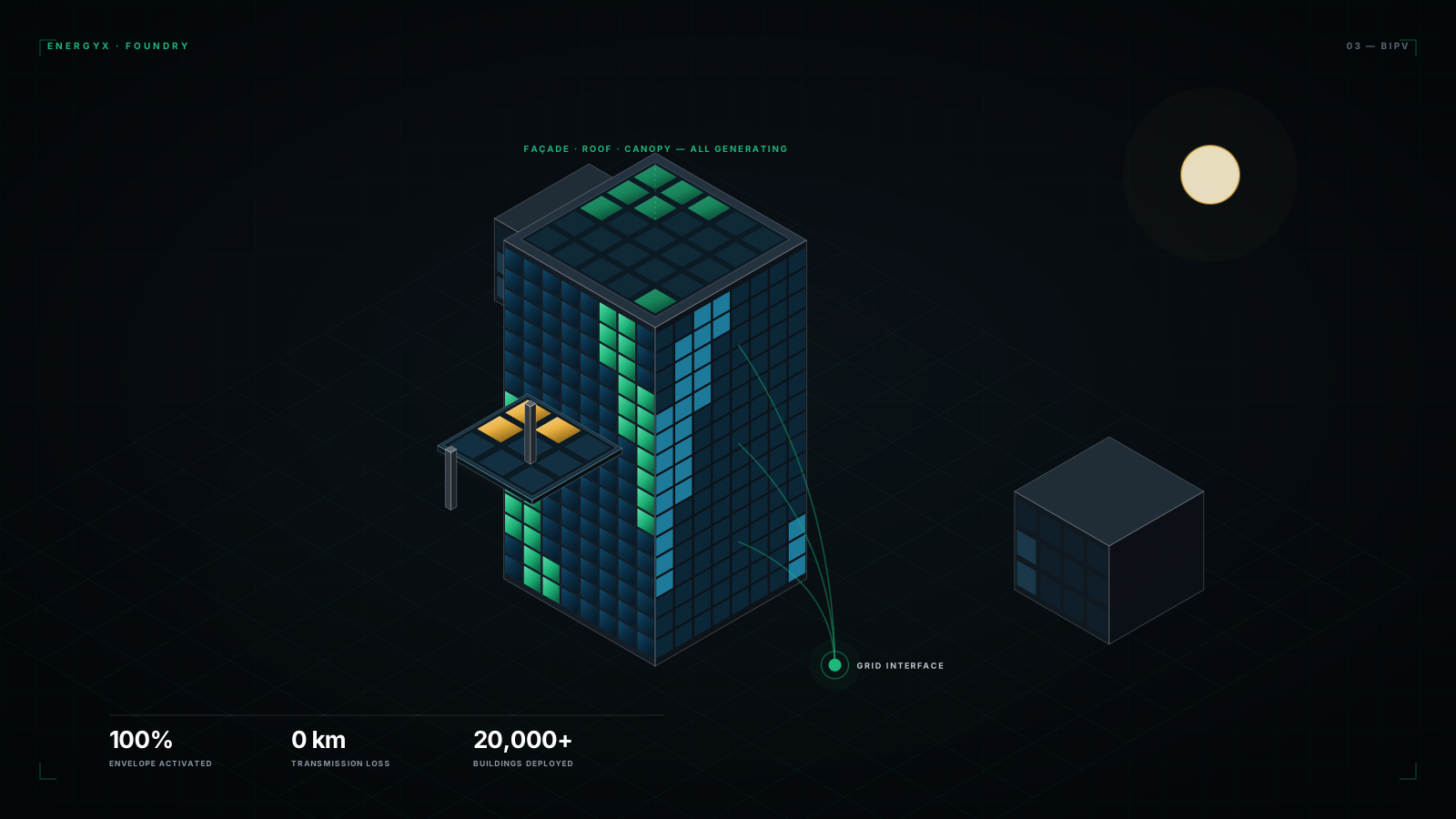
The building envelope is the largest underutilised energy asset in the built environment. BIPV replaces cladding rather than sitting on top of it, so the façade, roof and canopy stop being cost centres and start being generation.
Power is produced at the point of consumption. No remote farm to site, no transmission corridor to permit, and far less energy lost between generation and load. Engineered for the conditions where conventional solar underperforms — extreme heat, vertical installation, dense urban settings.
A footprint of 20,000+ buildings, with 2,000+ delivered using the integrated system.
Engine 02
The verified intelligence engine. EnergyX Intelligence combines multimodal AI, geospatial intelligence, engineering data, deterministic simulation and optimisation to evaluate and verify decisions across building design, energy performance, manufacturability, cost and lifecycle economics. It determines what should be built and how it should perform before those decisions become physical systems.
Inputs → simulation → verified decision → Foundry
Geospatial intelligence software
The geospatial platform turns multi-spectral satellite data into a measured model of where energy actually is. Global horizontal irradiance is resolved at sub-metre spatial resolution across more than 50 countries, which is the difference between siting a project on an assumption and siting it on evidence.
The same models run after commissioning. Predicted generation is compared against metered output continuously, so underperformance surfaces as a flagged asset rather than a quarterly variance.
Site selection, generation forecasting and portfolio monitoring from one measured layer.
City-level energy optimisation
An AI-native building energy management system that monitors, optimises and trades energy in real time. It is integrated with HVAC, insulation, on-site generation, lighting and consumption data, and it forecasts demand, weather and grid pricing up to 72 hours ahead — before the constraint appears, not after.
At city scale the same engine coordinates generation, storage and demand response across whole blocks. The building is the node. The city is the network.
Engineering data and deterministic simulation
Prediction is not enough. Before a design becomes a fabrication order, EnergyX Intelligence runs it through deterministic simulation — physics-based models of yield, thermal behaviour, structure and cost that give the same answer for the same inputs — and verifies the proposed configuration against the engineering requirements it has to meet.
How a verification run works. Inputs: the architect's model, measured irradiance for the site, the building's load profile, tariff structure, and Foundry's fabrication constraints. The engine generates the feasible envelope configurations — geometry, orientation, panel type, transparency — and simulates each for annual yield, thermal performance and structural load. Optimisation ranks them against cost and lifecycle economics. Output: a verified panel schedule with an expected performance range and its assumptions, handed to Foundry to build.
Once the building is operating, metered results are reconciled against the simulation. Where they diverge, both the models and the next fabrication decision improve. That reconciliation is the loop.
Intelligence verifies what should be built. Foundry makes it real. Deployment feeds both. Each engine has proprietary value on its own; together they compound — and the AI data centre is where that is tested hardest.
"Knowledge is power."— Francis Bacon, Novum Organum, 1620